A garden that remains pleasant in January as well as in August does not rely on luck. It is based on planting choices suited to the soil, on rigorous water management, and on some arrangements thought out from the start. Designing and maintaining a garden year-round takes less time than one might think, provided you understand what is really happening beneath the surface.
Water restrictions and garden watering: what the regulations change
You may have noticed that your neighbor waters his lawn in the middle of the afternoon in August? Depending on the department, this action could cost him a fine. In France, drought levels (vigilance, alert, reinforced alert, crisis) can limit or prohibit the watering of lawns, flower beds, and potted plants.
The rules vary from one department to another. To find out what applies in your area, you need to consult the current prefectural decree or the VigiEau website. Garden maintenance now depends on local water restrictions, not on a universal calendar found in a magazine.
This regulatory framework changes the way a garden is conceived. Planting a water-hungry hedge of thuja in a region that is regularly under drought alert exposes you to impossible watering constraints. It’s better to choose drought-tolerant plants from the outset.
If you have a well or private borehole, be aware that groundwater may be subject to the same restrictions as network water. Domestic extraction must also be declared. A well is not an automatic escape from seasonal prohibitions.
For those who wish to go further in designing their outdoor space, it is possible to explore the Jardins & Paysages website to find concrete solutions tailored to each type of terrain.
Rainwater harvesting for the garden: a strategic arrangement
Installing a rainwater harvesting tank is no longer an ecological gadget. It is a functional element of the garden that allows for watering vegetable gardens and flower beds even when the network is limited.
Harvested rainwater can be used to water gardens and vegetable patches without specific restrictions for outdoor uses. However, rainwater remains unsuitable for human consumption. If you connect the system to the inside of the house, the requirements become stricter: separation of networks, “non-potable water” signage, and, depending on the case, declaration at the town hall.
Why integrate this system from the garden’s design phase? Because an underground tank requires excavation work. Installing it afterward, once the paths are laid and the flower beds are planted, is much more expensive and disrupts the layout.
Here are the points to check before installing a rainwater collector:
- The available roof area for collection, which directly determines the recoverable volume each year
- The location of the tank in relation to the downspouts and the areas to be watered, to limit the length of pipes
- Compliance with local regulations, especially if the system is connected to the interior network of the house
Drought-resistant plants: the foundation of a sustainable garden
A garden that thrives all year without constant supervision relies on a selection of plants suited to the local climate. New plantings must survive their first summer with little water. This is the most critical period: the roots are not yet deep enough to seek moisture from below.
Perennials form the most reliable foundation. Once established, they return each year without replanting. Their root system strengthens over the seasons. Paired with a thick mulch, they significantly reduce the need for watering.
Mulching deserves attention. It serves not only to “look nice.” An organic mulch limits evaporation, nourishes the soil as it decomposes, and slows the growth of weeds. Pine bark, branch chippings, straw: each material has its advantages depending on the type of soil and the plants in place.
To structure a resilient flower bed, think in layers:
- The lower layer with evergreen ground covers that protect bare soil all year round
- The middle layer with perennials that bloom at different times (spring, summer, autumn) to maintain color for several months
- The upper layer with one or two shrubs that provide volume and shade to the plants below
This layering logic replicates what happens in a natural environment. Plants mutually protect each other from sun and wind.
Seasonal garden maintenance: the gestures that really matter
Many gardeners spend too much time on cosmetic tasks and not enough on the actions that determine the long-term health of the garden.
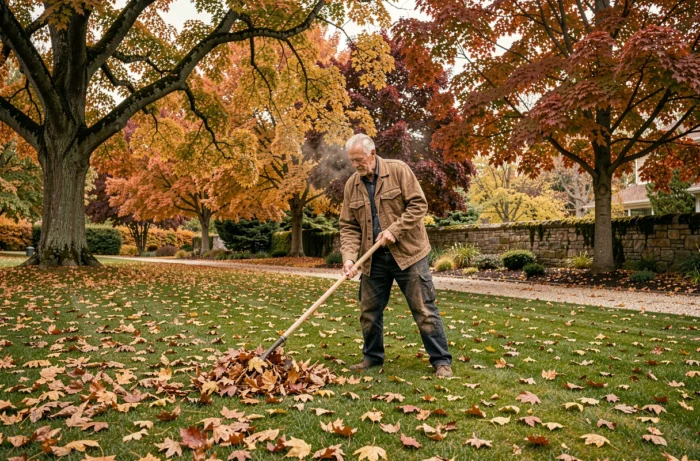
In autumn, the most useful task is to prepare the soil, not to clean it. Leaving fallen leaves at the base of flower beds protects the roots from frost and enriches the soil. Systematically collecting them to “clean up” deprives the soil of free organic matter.
In spring, the priority action is not to plant. It is to observe. Look at what has revived, what has suffered, where water stagnates after rain. This information guides plantings much better than a plan drawn on paper in winter.
In summer, water in the evening or early morning to reduce evaporation. Deep watering twice a week is better than light daily watering. Water should reach the roots, not just wet the surface.
Winter offers the ideal time to prune summer-flowering shrubs, restructure a path, or move a poorly positioned shrub. The moist soil makes uprooting easier, and the dormant plant withstands the shock better.
A garden designed with suitable plants, consistent water management, and targeted actions each season ultimately requires less effort than a garden planted randomly and salvaged in a hurry. The current water constraints push us to design differently, and the resulting gardens are often more beautiful because they are more coherent with their environment.