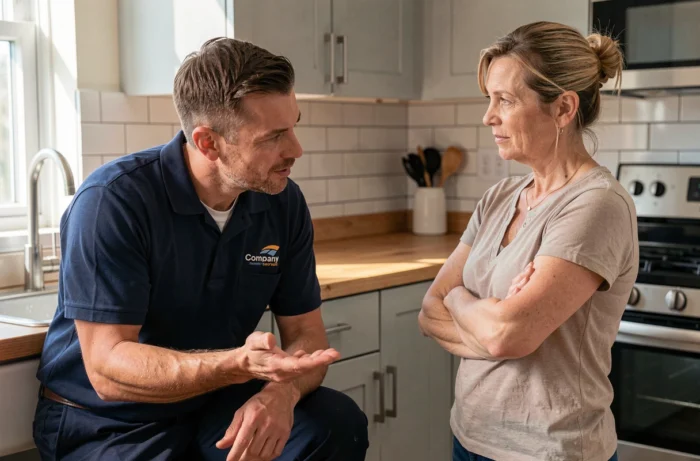
A client who opens their door to a home service provider takes a risk. They entrust their private space, sometimes their vulnerable loved ones, to someone they do not know. Trust cannot be decreed in a marketing brochure. It is built on tangible, verifiable evidence, repeated with every intervention.
HAS Framework and Quality Assessment: Evidence Clients Can Verify
Most articles on trust in home services talk about smiling, punctuality, and interpersonal skills. These elements matter, but they remain subjective. An often-overlooked lever of trust is, however, accessible to all clients: the regulatory framework.
Since the Social Security financing law for 2022, the old internal and external evaluations of home services have been replaced by a national framework led by the High Authority of Health. The evaluation takes place every five years for authorized services. A provider that clearly displays its authorization status and evaluation results offers a verifiable guarantee, far beyond online testimonials.
Have you noticed that some providers highlight labels without ever specifying what they cover? The HAS framework changes the game: the criteria are public, standardized, and the results are accessible. A provider that is transparent on this point sends a strong signal. As detailed by www.no-passion.com, this approach to regulatory transparency becomes a real differentiator in a sector where mistrust is still common.
For a client, the question to ask is simple: “Are you evaluated according to the HAS framework, and where can I consult your results?” A provider that dodges the question deserves scrutiny.

Coordination of Care: Trust Does Not Stop at Cleaning Services
The reform of home autonomy services, rolled out since 2023, has transformed the very notion of reliability. Previously, home help and care services often operated in silos. The client had to make the connections between the providers themselves.
Trust now rests on the ability to coordinate help and care in a coherent journey. For an elderly person losing autonomy, knowing that their caregiver communicates with the home nurse or the treating physician changes everything. It is no longer a one-off service; it is structured support.
Why does this point matter so much? Because a failed intervention in home services is not limited to a poorly cleaned floor. When it comes to fragile individuals, a lack of coordination can have consequences for health or safety. A provider that invests in tracking tools and interprofessional communication builds a level of trust that mere punctuality cannot achieve.
What This Means for the Client
- A single point of contact that centralizes information between different providers (cleaning staff, caregivers, healthcare professionals)
- A written follow-up of services and observations communicated to the relevant healthcare professionals
- Responsiveness in case of changes in the condition of the person being assisted, without the client having to contact each professional separately
Selection of Providers: What Distinguishes Serious Recruitment from a Simple CV
The topic of recruitment comes up in all articles about home services. The difference between a provider that inspires trust and another often lies in what happens before the first intervention.
An interview alone is not enough to guarantee the reliability of a provider. The most rigorous providers add concrete steps: checking references with former employers, practical situational assessments, and a trial period accompanied by structured feedback from the client.
A point rarely addressed: the prior introduction of the provider to the client. Before the first service, some providers arrange a meeting for the client and the provider to get to know each other, define expectations and boundaries together. This exchange time, which may seem trivial, significantly reduces misunderstandings and contract terminations in the initial weeks.

Criteria to Check Before Committing
- Does the provider offer a meeting with the provider before the services begin?
- Is there a replacement process in case of absence, with a provider already trained in the client’s context?
- Does the provider collect formal feedback after the first interventions to adjust the service?
- Is the ongoing training of teams documented and regular?
Transparent Pricing and Tax Credit: Alleviating Financial Doubts
Trust also plays out in the financial realm. A vague quote, additional fees discovered later, a misunderstanding about the tax credit: these situations generate lasting mistrust.
A reliable provider details every line of their pricing before signing. The hourly rate, any travel fees, surcharges for holidays or off-hours: everything must be clear. Departments are also required to provide data related to the pricing of home help services, contributing to better transparency in the sector.
The tax credit for personal services remains a recurring concern. Rumors about its potential modification regularly resurface in public debate. A provider that clearly explains the mechanism, provides tax certificates on time, and anticipates clients’ questions on this point turns an administrative obligation into proof of seriousness.
Trust in home services does not rest on a single pillar. It combines regulatory transparency, professional coordination, rigor in recruitment, and financial clarity. A provider that masters these four dimensions does not seek to charm: they empower their clients to verify for themselves.