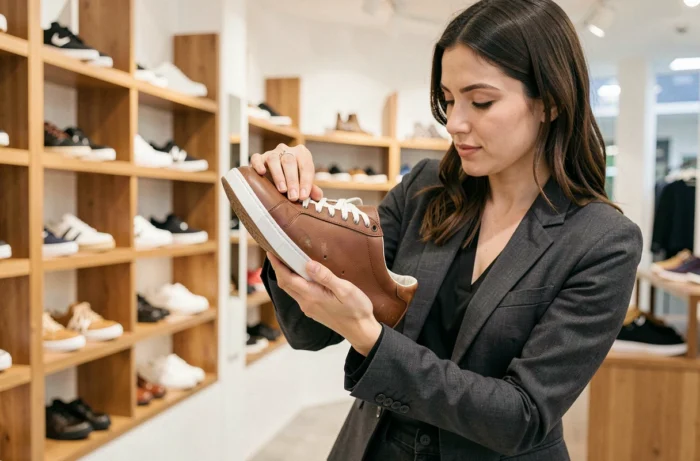
How to distinguish an authentic pair from a counterfeit when copies now reproduce holograms, security inks, and embossed finishes with a precision that deceives the naked eye? The question is no longer limited to flipping the shoe over to inspect a label. It involves digital tools, recent European regulations, and a verification chain that far exceeds simple visual examination.
Shoe Counterfeiting: What Physical Indicators No Longer Reveal
Classic guides recommend checking the stitching, logo, and glue quality. These criteria remain useful for low-end copies, but high-end counterfeits reproduce certain details with enough fidelity to pass a purely visual inspection.
A physical examination remains relevant as long as multiple indicators are cross-referenced simultaneously. No isolated point is sufficient to make a decision. To deepen the method, the Oh my shoe website details the physical criteria model by model.
| Physical Indicator | Authentic Pair | Common Counterfeit | High-End Counterfeit |
|---|---|---|---|
| Stitching | Regular, thick thread, no visible glue residue | Irregular, thin threads, frequent glue excess | Close to the original, sometimes slightly misaligned under direct light |
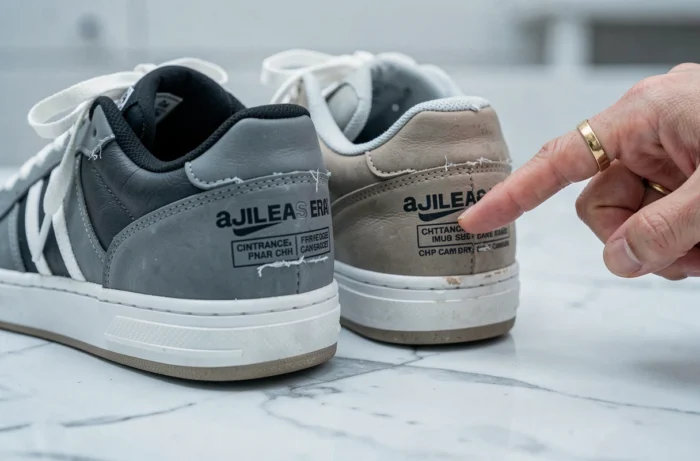
| Logo and Markings | Clear relief, typography consistent with the official catalog | Modified fonts, incorrect spacing | Faithful reproduction, discrepancies detectable only by direct comparison |
| Insole | Dense foam, clear laser printing | Soft foam, blurry or peeling print | Correct density, print sometimes slightly grainy |
| Odor | Neutral leather, textile, or rubber | Strong chemical smell (solvents) | Faint smell, harder to distinguish |
The table shows that high-end copies blur the line on every visual criterion. This is why physical inspection must be complemented by other checks.
Authentication by Resale Platforms: Real Reliability of Services
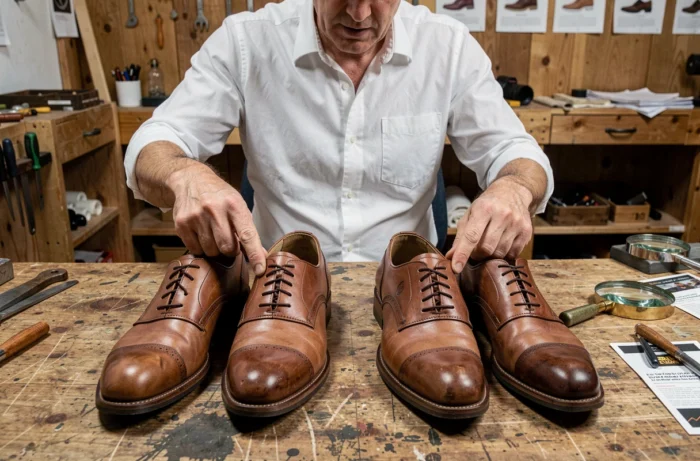
The main second-hand platforms no longer just connect sellers and buyers. They incorporate authentication steps combining computer vision and human examination. This dual filter offers a level of verification different from a simple photo or an invoice sent by an individual.
A pair accompanied by a certificate of authenticity issued by a specialized platform has gone through a structured process. In contrast, a pair sold between individuals on a social network or a generalist site does not benefit from any intermediate control.
What an Independent Authentication Service Checks
- Compliance of materials and finishes against a database of reference pairs, model by model and color by color
- Consistency between the serial number, barcode, and manufacturer records when accessible
- The condition of the packaging (box, tissue paper, labels) compared to the brand’s standards for the relevant production season
Cross-referencing provenance, invoice, and authentication service significantly reduces risk much more than a single visual examination, no matter how thorough.
European Digital Passport and Traceability of Authentic Shoes
The European regulation on the eco-design of sustainable products (regulation (EU) 2024/1781) is gradually introducing digital product passports. These passports provide electronically readable information about the identity, composition, and production chain of an item.
For shoes, this system changes the game. A digital passport links each pair to a verifiable unique identifier, complicating the task for counterfeiters. A QR code or an integrated NFC chip allows tracing back to the manufacturer, the production date, and the declared materials.
Current Limitations of the System
The rollout remains gradual. Not all brands and categories of shoes are yet covered. Counterfeiters may also attempt to replicate a QR code, but the link then points to a non-existent or inconsistent database.
Verifying the digital passport via the brand’s official website remains the most reliable method to confirm the authenticity of a recent pair.
Buying Online Without Risk: Warning Signals Before Payment
The price remains the first filter. A pair priced significantly below its value on specialized sites or in official stores signals a high risk. But other signals deserve equal attention.
- The absence of a clear return policy or complete legal mentions on the seller’s site
- Generic product photos, identical to those on the official site, without a real picture of the pair for sale
- A seller who refuses to provide an original purchase invoice or a receipt from an authorized store
- A recent domain name, with no verifiable reviews on third-party platforms
The European Parliament has adopted new customs and e-commerce rules aimed at strengthening controls on imported products, particularly to combat the influx of counterfeits sold online. These measures directly target low-value shipments, a preferred channel for copy sellers.
Purchasing from an official brand site or an authorized reseller eliminates most risks. For the secondary market, prioritizing a platform that physically authenticates each pair before shipping remains the most effective precaution. A consistent price, a traceable seller, and a third-party authentication service form a trio of checks that makes counterfeiting detectable even before opening the box.