Almond cream is an emulsion of butter, sugar, ground almonds and egg. Its final texture depends on the order in which the ingredients are added and the temperature at which each component is prepared. Mastering these two factors helps you achieve a soft filling after baking, without any graininess or sinking, whether you’re making a fruit tart, a galette des rois or a shortcrust pastry base filled for dessert.
Butter temperature and almond cream texture
Butter is the backbone of almond cream. If it’s too cold, it forms lumps that the ground almonds won’t absorb. If it’s too soft or melted, the mixture will be runny, spread out and fail to rise during baking.
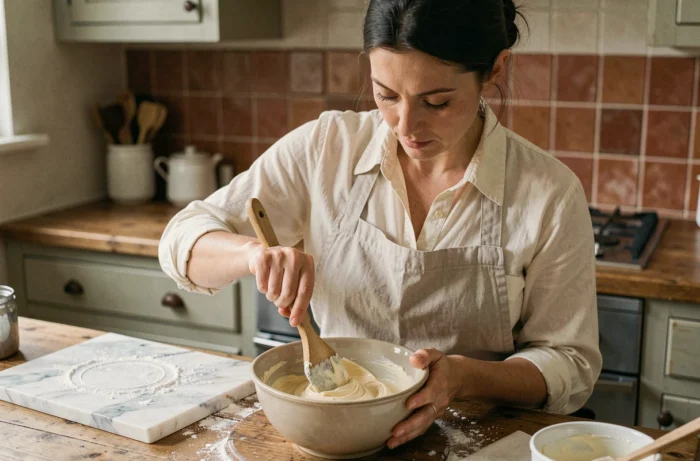
The ideal consistency is reached when the butter yields to light pressure from your finger without sticking. At this stage, it creams evenly with the sugar and traps tiny air bubbles that give the filling volume in the oven.
Whisking or beating the butter with caster sugar for a few minutes, until the mixture turns pale, is the first step you shouldn’t rush. Compared with icing sugar, caster sugar adds a slight graininess that aerates the butter more effectively. Icing sugar makes for a smoother but denser mixture, which can work well for certain uses (a smooth finish, a thin tart) but makes the final result less tender.
Once this base is ready, gradually add the egg. An egg taken straight from the refrigerator can cause a temperature shock when added to creamed butter, which may cause the emulsion to split. Taking the egg out about 20 minutes beforehand, or briefly warming it in a bain-marie, solves this problem. If you’re looking for a detailed, step-by-step almond cream recipe for tarts, the classic proportions use equal parts butter, sugar, ground almonds and egg.
Ground almonds and flour: how they affect the filling
Ground almonds are the heart of almond cream, both in flavour and structure. Their texture directly affects how tender the filling is: very finely ground almonds (blanched and sifted) create a silky texture, while coarser ground almonds or those with the skins on produce a more rustic, slightly grainy result with a stronger almond flavour.
Some recipes add a small amount of flour or starch. This addition helps the cream set after baking and makes it easier to slice, which can be useful for a fruit tart that needs to be served in neat portions. The downside is that flour dulls the almond flavour and makes the crumb firmer.
For a tart with a filling that should melt in your mouth, it’s best to leave out the flour and rely solely on the butter-almond-egg trio. The result is more delicate when unmoulding, but the flavour is uncompromised.
Almond cream and frangipane: two different fillings
Frangipane combines almond cream and pastry cream, changing both the texture and how well it holds its shape. Pastry cream adds moisture and extra binding thanks to its starch content. The result is creamier and less dry, but also heavier.
Frangipane is the usual choice for a galette des rois. For a fruit tart where the filling forms a thin layer beneath fresh or poached fruit, plain almond cream is a better fit: it bakes faster, rises more and doesn’t make the pastry soggy.
Making almond cream ahead: texture and food safety
Making the cream the day before makes planning easier, especially for a special meal or an early-morning bake. Raw almond cream contains raw egg, so it must be stored with care.
ANSES recommends keeping preparations made with raw eggs refrigerated and eating them promptly. For uncooked almond cream, the guideline to remember is a maximum of 24 hours in the refrigerator. After that, the risk of bacterial growth increases, even if the filling will later be baked in the oven.
- Cover the cream with cling film directly on its surface to prevent oxidation and drying out.
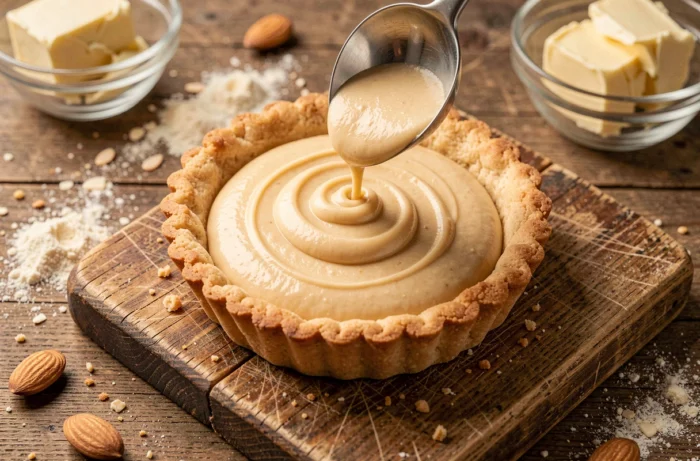
- Take the cream out of the refrigerator 15 to 20 minutes before filling the tart so it softens and spreads without tearing the pastry.
- Avoid freezing and then thawing the raw egg in the cream: temperature fluctuations encourage condensation on the shells of eggs still in storage, which can make it easier for bacteria to penetrate. Keeping eggs at a stable temperature is best practice.
As for texture, chilling has an advantage: the butter firms up, making the cream easier to pipe or spread evenly over the tart shell. After baking, there’s little difference compared with cream used straight away.
Baking a tart filled with almond cream: practical guidelines
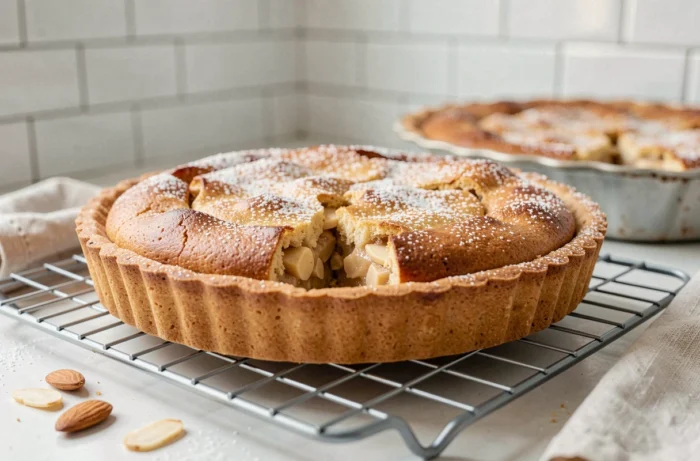
Almond cream bakes at 170 to 180 °C in a fan-assisted oven. A higher temperature makes the surface rise too quickly, creating a brown crust while the centre remains liquid. A moderate oven ensures even baking from the edges to the centre.
The thickness of the cream layer determines the baking time. A tart with a one-centimetre layer of filling needs less time than a generously filled galette. The reliable test: press lightly in the centre with your finger; the cream should feel soft but not wobble.
For a fruit tart, place the fruit (pears, apples, apricots) directly on the uncooked cream before baking. The juices released by the fruit seep into the cream, creating an exchange of flavours. Baking the cream on its own first and adding the fruit afterwards gives a drier result with less cohesion.
Almond allergen: an important point to remember
Almonds are among the tree nuts covered by European food labelling regulations (the INCO Regulation). For any pastries sold at a market, a charity sale or an event, allergen information must be available in writing, even for products that are not prepackaged.
Almond cream is a simple, accessible and versatile base. Four ingredients in equal parts, butter at the right temperature and a well-incorporated egg are all you need to turn any shortcrust or puff pastry into a finished dessert. Everything else—flavourings, zest, spirits—is simply an extension of this well-mastered base.