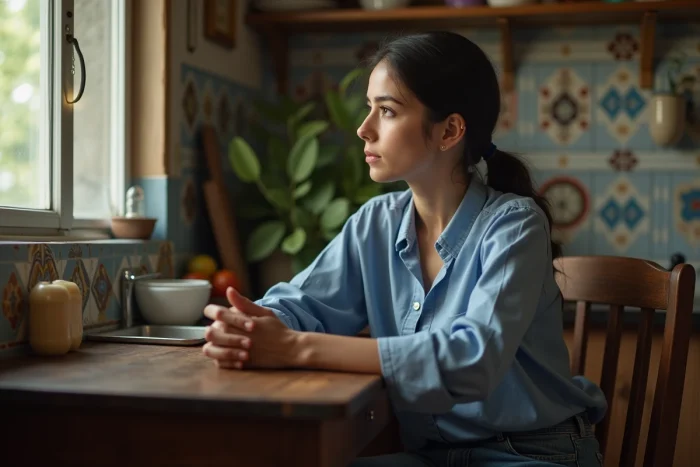
The name of Manuela Escobar does not appear in any judicial records, nor in the investigation reports related to Colombian drug trafficking. Unlike many descendants of criminal figures, she has never claimed a public legacy or attempted to exploit her father’s notoriety.
Her existence remains marked by voluntary erasure, contrasting with the global fascination for Pablo Escobar’s story. Behind this discretion lies a unique journey, shaped by imposed choices and a media exposure often endured against her will.
Manuela Escobar, a childhood under the world’s gaze and the shadow of an extraordinary father
Behind the armored walls and monitored gates of Envigado, Manuela Escobar grew up cut off from the ordinary world. Daughter of the Medellín cartel leader, obsessively protected by Pablo Escobar, she experienced a universe that was both lavish and surrounded by anxiety. Born on May 25, 1984, to Pablo Escobar and Maria Victoria Henao, Manuela is the youngest, the younger sister of Juan Pablo Escobar. Hunted by authorities, Pablo Escobar made security a domestic religion, infusing every daily gesture with a latent tension.
For Manuela, schooling took place at home, supervised by her parents. The dangers were constant, life contracted around the family circle. A child’s laughter would shatter against the noise of a helicopter or the announcement of a hasty move. Moments of complicity with Pablo Escobar were imbued with rare tenderness, but freedom remained locked away. The family territory was a fortress: everything was controlled, marked out, closed off from the outside world.
The death of Pablo Escobar in December 1993 shattered this bubble, already undermined by fear. Fleeing Colombia became the only option. For the daughter of Pablo Escobar, Manuela, childhood ended abruptly. A life of secrecy, loss of bearings, and forced reconstruction began, far from the spotlight and fantasies. The narrative unfolds in fragments, between shadow and light, as told in “The Life of Manuela Escobar: Find her intimate portrait here.”
Some key milestones help to situate the stages of this childhood shaped by violence and flight:
- Birth: May 25, 1984, Medellín
- Parents: Pablo Escobar and Maria Victoria Henao
- Brother: Juan Pablo Escobar
- Childhood: Private but marked by violence and flight
- Exile: After 1993, departure from Colombia
What life choices in the face of Pablo Escobar’s controversial legacy?
After the death of the cartel leader, the Escobar family scattered across several continents. Argentina, Mozambique, Brazil, South Africa, then Ecuador and Peru: each country crossed imposes new landmarks, new codes. At each border, Manuela must erase a little more of her father’s trace, without ever being able to forget him. She then adopts the name Juana Manuela Marroquin Santos, a strong act that reflects her desire to detach herself from a past too heavy to bear.
This withdrawal from public turmoil does not make the legacy easier to bear. Manuela cannot ignore the origins of the family fortune. Colombian authorities monitor her, threats persist, and lawsuits follow one another. She refuses to remain silent or erase history. In her book “Beyond Appearances”, she attempts to deliver her own truth, far from the crushing myths.
From a distance from the media, Manuela initiates a charitable foundation to support the victims of the cartel. A portion of the family inheritance is used to fund social projects in Colombia. This approach, applauded by some and contested by others, reflects a desire to repair, as much as possible, the scars of the past. The magazine Gente photographs her in Buenos Aires: Manuela Escobar, face turned towards the future, tries to transform fate into commitment.
| New identity | Juana Manuela Marroquin Santos |
| Main countries of exile | Argentina, Mozambique, Brazil, Ecuador, South Africa, Peru |
| Commitment | Charitable foundation, social projects |
| Published work | ‘Beyond Appearances’ |
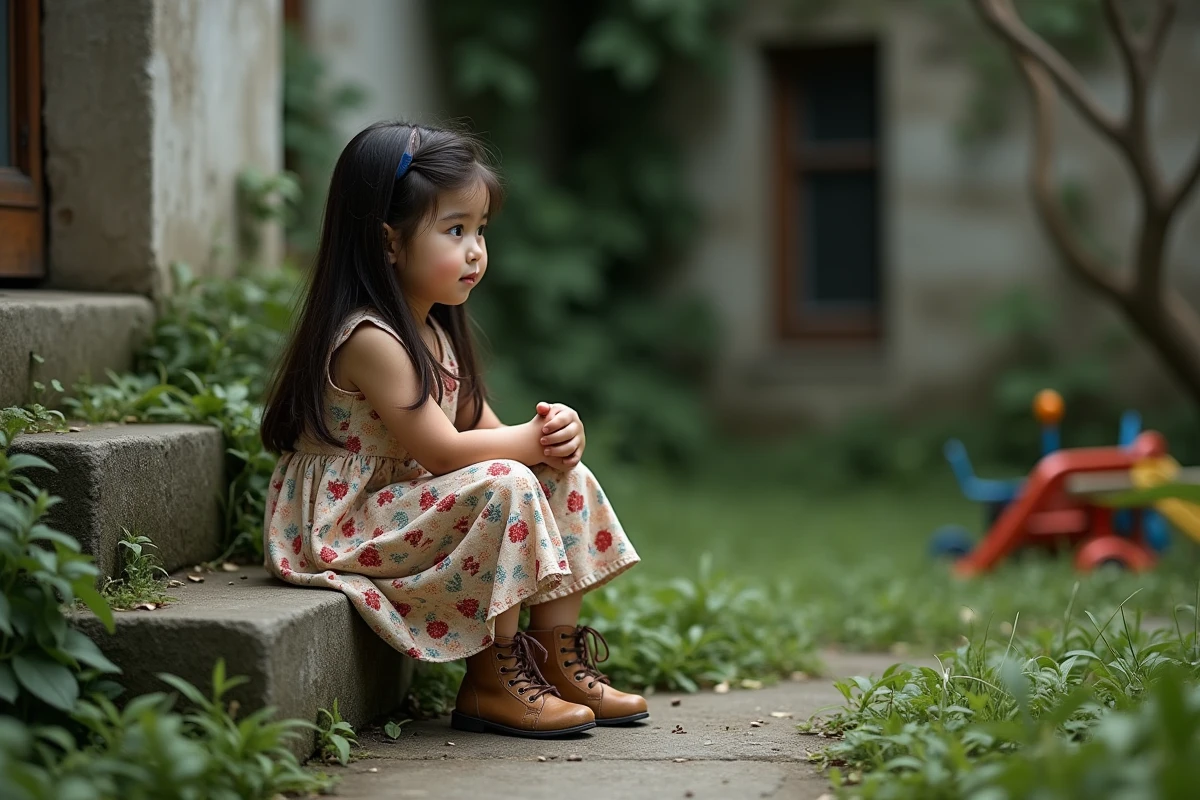
Between stigma and resilience: the unique trajectory of Manuela in Colombian society and beyond
Carrying the name Escobar means living with a permanent suspicion. Marked from childhood by violence, flight, and exile, Manuela must navigate a heavy social gaze. In Colombia and elsewhere, she evokes distrust, with judgments preceding encounters. This distrust affects her private life as well: according to her close ones, she has gone through periods of depression, seeking to free herself from an image that clings to her, sometimes on the brink of the abyss.
In the face of this fate, Manuela clings to her studies. Graduating in psychology, she is interested in the mechanisms that crush and confine. The spotlight remains far away; she prefers discreet paths. Her commitment also unfolds in visual arts: there, in creation, she finds a way to transform pain into gesture, memory into expression, without ever falling into exhibitionism or ease.
Her circle is limited to a few friends, close ones she trusts. Year after year, Manuela charts a unique path of resilience. The story of Pablo Escobar’s daughter raises questions: can a society overcome the temptation of rejection and accept the complexity of those who inherit an extraordinary history? Manuela’s trajectory remains open, at the crossroads of collective memory and individual emancipation.